
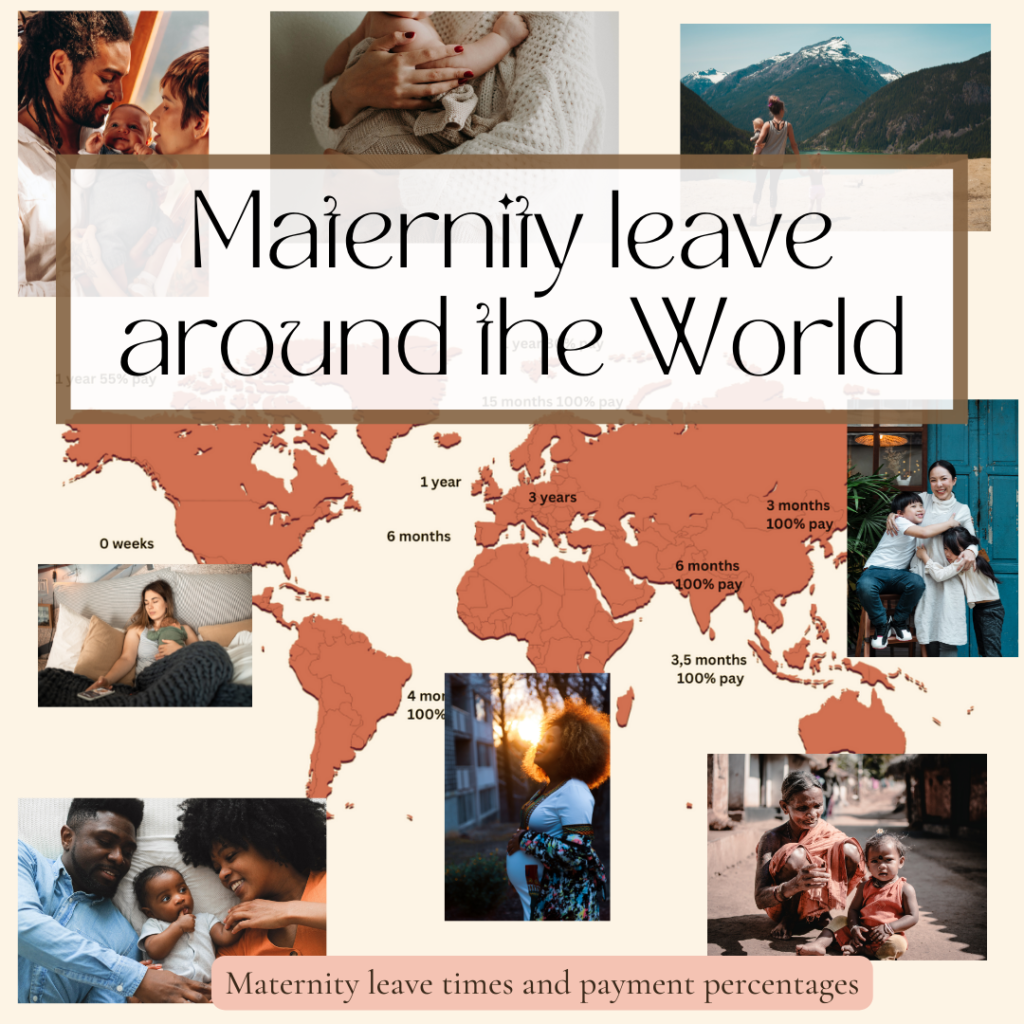
Parental leave times and payment percentages
Want to find out what are the maternity and paternity conditions in variable countries around the world? Maybe you have it better than other, maybe worst.
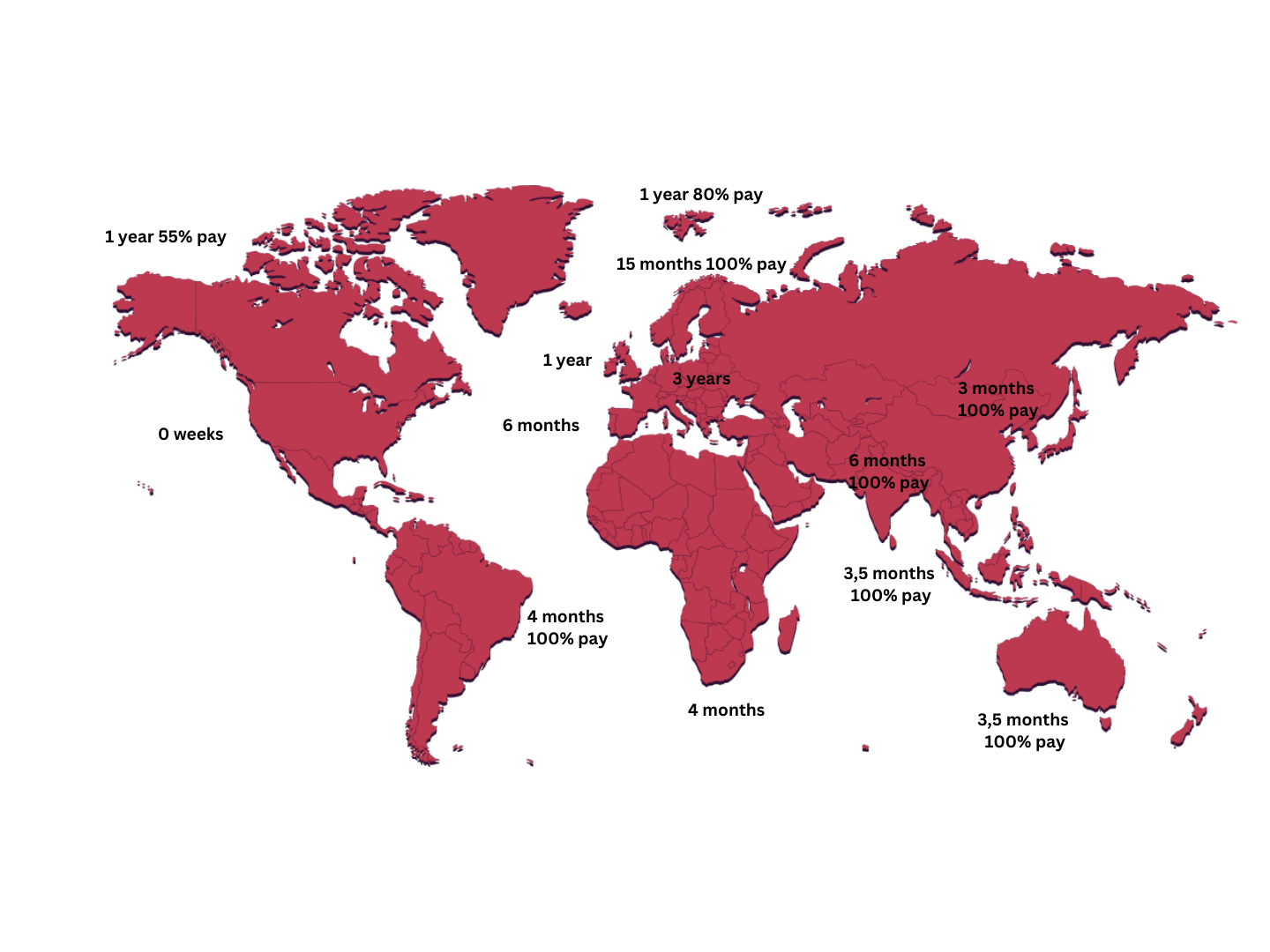
Most of us hear about the time parents are allowed to take for maternity and paternity but rarely we hear about the pay that accompanies it. Off course it’s nice for your workplace to save your job position for a year, but if that means you only get payed for 3 months, is it really that good? Do not assume that more time is better, for many places do not offer compensation to make it realistic for families to use all of that time. Should we really need to save that much just to have a child, in an advanced thecnologic world like ours? Shouldn’t we, as providers of the next generations (that many cases are the ones paying for our retirement funds) be granted the time and money to care for these tiny creatures in the first months of their life? Maybe first year? First years?
Let’s discover how it is in other countries so we can advocate for better conditions where we live. Sorry if many of you may end up being depressed (speciallly americans).

Europe
Portugal
In Portugal you can choose to have 120 days (4 months) at 100% pay or 150 days (5 months) at 80% pay. This can be used exclusivly by the mother and can start 30 days before delivery date. But if the other parent wants to use some (minimum of 30 days) they will add 30 days to the total ammount of time. Apart from that the father/other parent has a mandatory 15 days leave, the first 5 need to be taken right after the baby is born, the rest can be taken during the mother’s leave, and are payed at 100%.
Spain
Each parent has 16 weeks with 100% pay. The first 6 weeks are mandatory for both. Mother’s leave can start 4 weeks before due date.
France
In France the maternity leave varies according to the ammount of children you already have. So for the 1st and 2nd child the mother gets 6 weeks before due date and 10 after, a total of 4 months. For the 3rd child or more the pre-due date leave goes up to 8 weeks and after to 18 weeks, to a total of 6,5 months. The other parent is intitled to 25 days (including weekends), plus 3 days right after birth (payed by employer). Of these 25 days, 4 must be used straight after the 3 days after birth. The percentafge of payment includes some difficult math that related to how much you payed the state in the last 3 months of work, with minimum and maximum values, but from what i understood it can be close to 100%.

Italy
In Italy the mother has 5 months of maternity leave with 80% pay, the period can start up to 2 months before the due date. The other parent has 10 mandatory days, payed at 100%, to be used while the mother’s on leave. Parents can ask for an extended 6 months of parental leave with reduced pay.
Croatia
The total ammount of parental leave is 12 to 14 months, with aditional 28 to 45 days before due date. These days plus the first 6 months are payed at 100%. The remaining 6-8 months are also payed at 100% but with a cap of 1000 euros. The father has 10 mandatory days that have to be used until the child is 6 months old, payed at 100%. The remaining leave can be divided between parents.
Slovenia
Maternity leave starts 28 days before labour and lasts for a year at 100% pay. The other parent has mandatory 30 days, the first 15 need to be used within the child first year, while the remain can be used until the end of the first grade of the child’s elementary school. Off this 1 year, 105 days are mandatory for the mother while the remaining 260 can be split between parents as they please.
Romania
Maternity leave is 126 days, split before and after birth. There are 63 mandatory days to take before the birth, outside the 126 days, and 42 after the birth. The remaining 84 days can be taken earlier or later. Payed at 85% of income. As for the father the state gives 10 days, and 5 more days can be added if he completes a childcare course, all payed at 100%.
The parental leave can be extended into child raising benefits- up to the moment when the kid becomes 2 years of age (or 3 years in case of a handicap or developmental problems). The allowance is again 85% of the income, but no more than approximatly 1600 euro.
Hungary
Parental leave can be extended up to 3 years.
The first 24 weeks are paid at 100% and can be split between parents, and start 4 weeks before due date. Of these, the first 2 weeks post partum are mandatory for the mother, and 5 days for the father, within the first 2 months. After these 6 months you can apply for extra subsidies (like GYES, CSED and GYED) until the child is 3 years old, payment varies.

Austria
Mandatory maternity leave starts 8 weeks prior and extends to 8 weeks after birth, with full pay.
Then you can decide between 1 or 2 years, with 80% in the first year. This means if you choose 2 years you can get 80% the first year and unpaid the second, or split the money equally (so 40% a month). If your partner shares some of this time, they extend the first payed year with 2 more months.
There is a good catch in the system. It’s called Bildungskarenz, and it’s a one year leave with 80% pay that you can request to your employer. It’s a leave payed by the state for learning something new. So you will need to do a course of circa 16 hours per week, from home.
Germany
Here maternity leave consists of 14 weeks around birth at full pay (6 weeks before the estimated date, 8 after). The remaining parental leave is 14 months, that can be split between parents at 65% of their previous income, up to 1800€. You can, however, expand the leave up to 24 months, with half the pay per month, or 3 year, being the last unpaid.
The other parent is intitled to 2 weeks, at 100% pay, to be taken within the child’s first 6 months.
Netherlands
The mother gets 16 weeks, of which 4 are mandatory before the due date, while the partner has one week mandatory, both on full pay. After that, they can take 9 weeks additional leave at 70% pay, within the child’s first year.
Denmark
Parental leave here is a total of 52 weeks. The mother must take 4 weeks before the due date and 14 weeks after, while the father has 2 weeks of leave to be used within baby’s first 14 days of life. All full paid. The remaining 32 weeks can be split between parents.

UK
Statutory Maternity Leave is one year, of which the first 39 weeks are paid, and the last 13 are unpaid. The allowance is 90% of weekly earnings for the first 6 weeks and then £156.66 or 90% (whichever is lower). Some companies can offer enhanced packages to complement pay or extend payed weeks.
Maternity leave can start up to 11 weeks before due date, but there is no obligation to use any time pre birth, as opposed to after birth, where the first 2 weeks are mandatory.
The other parent can have 1 or 2 weeks with the same rule for weekly payment of £156.66 or 90% (whichever is lower). Apart from the mandatory weeks, the remaining of the parental leave can be split amongst parents as they wish.
Ireland
The mother has 26 weeks, covered by the state at 250€ a week, some companies will offer supplementary compensation on top of this. There are 2 mandatory weeks before birth and 4 after. After the 26 weeks you can ask for 16 more week, but these are unpaid. Paternity leave consists of 2 weeks with the same pay rules.
Ireland does have two aditional leaves – parent’s leave and parental leave.
Parent’s leave entitles each parent to 7 weeks leave, with the same 250€ per week, within the childs fists 2 years. While parental leave allows parents to take up to 26 weeks of unpaid leave until the child is 12 years old.
Norway
In Norway you can choose between 49 weeks (circa 11 months) with 100% pay, or 59 week (circa 13 months) with 80% pay. The maternity leave starts 3 weeks before due date. When the child is born the mother is obliged to take 15 weeks, the dad 15 weeks and the rest can be divided as they wish. The other parent is entitled to 15 days postpartum but they are paid by the employer so they may or may not be paid days.
Sweden
In the equality characteristic of nordic countries the parental leave consists of 480 days divided 50/50 between parents, and can be used until the child is 8 years old. From these the parents can transfer days to each other, but need to have a minimum of 90 days each. There is a mandatory period for the mother, that consists of 7 weeks prior and 7 weeks after birth. The mother’s leave can start up to 60 days prior to delivery date, and the other partner is intitled to 10 days after birth. The parental allowance is circa 80% of your payment.

Finland
In Finland the maternity leave can star 30 days before due date, after due date each parent has 7 weeks at home with full pay. The remain of the leave consists of 160 days to each parent, but you can interchange 63 days from one parent to the other. For the first 4 months you are paid in full, the remaining time is calculated accordingly to your anual salary. It’s hard to decipher the state website for percentages as they basically just tell you to predict your own case, but I’ve heard some people say its 70% while others claims it reduces the ammount per month until a maximum of 300€ in the last months.
Iceland
The total parental leave is 12 months equally split between parents, altough they can transfer 6 weeks to one another. The pay corresponds to 80% of their previous wages.
America
USA
0…Zero…nada…niente.
Yep you read it correctly, by law the united states do not have any maternity leave. Companies are not obliged to give any time off or any compensaton minimum after birth. Even the companies that offer some benefits – usually 12 weeks of unpaid leave – you need to have been working for them for 1 years prior to due date. Most woman whose companies don’t offer any leave use their vacation days, plus short term disability and FMLA. Ammount of vacation days depends on company rules. Short term disability varies from state to state and other factors, but usually pays 60% of income. If you are eligible for FMLA (family and medical leave act), you can take up to 12 weeks of unpaid leave.

Canada
In the neighbour country however, the parental leave is between 12 to 18 months. The mothers are intitled to 15 weeks, that can start 12 weeks before birth, with 55% pay. The remaining time can be split between partners. If you choose 12 months the payment is 55%, if 18 then it lowers to 33%.
Brasil
In Brazil mothers have a mandatory 4 months leave, that can start one monthe before due date, while the other parent has 20 days, both with 100% pay. There is a tax benefit from the government, in which companies can give one extra month (also with 100% pay) and they get some tax relief.
Cuba
Maternity leave here starts at 34 weeks of pregnancy and is mandatory until 12 weeks after, with full pay. The total of parental leave are 40 weeks, and the other parent is intitled to 12 weeks of leave with 60% pay.
Africa
Mozambique
Here the maternity leave is different from state and private sectors. While the state has increased it to 90 days, the private sector only needs to provide 60 days. Independently, they are both payed at 100%. Maternity leave can start 20 before due date, and paternity leave is just one day.
South Africa
Labour law provides for 4 months of maternity leave, which can be taken from one month prior to due date. Pay varies from 38% to 60%, accordingly to what you were payed before – higher salaries means lower percentage. Paternity leave is 10 days.

Asia
South Korea
In Korea maternity leave is 3 months with 100% pay, and it can start 45 days prior due date. Paternity leave is 2 weeks at full pay. There is the option for additional family leave part or full time for up to a year at a reduced percentage of pay.

Philippines
Maternity leave of 105 calendar days, payed at 100%, starting 45 days before birth. There is also the option to extend for 30-days, unpaid. The other parent is intitled to 7 days at 100%.
Singapore
The singaporean government gives 16 weeks with 100% salary for mother and 2 weeks 100% salary for father. The mother can transfer 4 of the weeks to the father.
India
Maternity leave in India consists of 26 weeks at 100% pay for the mother, and can start 8 weeks before due date. Nothing statutory for the father, varying according to company policies, but governmental employees get 15 days.
Oceania
Australia
In Australia, altough you can take up to 2 years of parental leave, most of it is unpaid. The government pays the mother 18 weeks (90 days) and the other parent 2 weeks (10 days), both at minimum wage. Maternal leave can start up to 6 weeks before birth.
But it appears to be common for companies to provide more time with higher pay.
New Zealand
6 months, that can start 6 weeks before birth are intitled to the mother and matched up to $660 per week. After that you can have 6 more months but unpaid with a $60 best start grant. The partner can get 1 or 2 weeks unpaid.

I hope you enjoyed knowing more about conditions in other countries. Hopefully you live in a place that offers you great conditions. If not, please use this info to make your community advocate for better conditions in such a fragile and brief moment in life.
Lots of love, cuties <3
If you just started your maternity journey, make sure you check some of my other posts like